How To Make #HomeUpgrades That Pay

How a couple of hands-on homeowners took a bungalow from dilapidated to delightful, using home-center finds.

Beautiful Bungalow

Exterior view of this remodeled bungalow

It takes a certain eye to see a smart little cottage where others see a stucco teardown. But Steve and Shauna Mullins had exactly that vision when they first saw this 875-square-foot bungalow in Hermosa Beach, California.

“It was in a great location, less than a mile from the beach, and the basic layout was good—it hadn’t been screwed up,” Steve says. Still, the exterior of the 1941 house was showing its age, and its small rooms needed an update. Collaborating with architectural designer Rosa Velazquez on the front of the house, doing much of the work themselves, and enlisting a general contractor for the bigger projects, the couple lavished the tiny two-bedroom with a proud new facade and freshened the interior throughout.

For nearly all their redo needs, they jumped in the car and hit nearby home centers, scouring the aisles for well-priced shutters, fencing, cabinets, crown molding, paint, and more.

Removing the front wall’s stucco and putting up white fiber-cement lap siding refreshed the front face of the house. The other walls got a coat of white paint. Exposing the rafter tails, as well as topping the roof with new asphalt shingles, added welcome detail to the roofline. Relocating windows created symmetry and allowed room for shutters.

Building a deeper portico with chunky columns and crisp railing made the entry more welcoming. A bright red door with brass hardware, lantern-style sconces, salvaged brickwork, and a rose-entwined picket fence helped give the cottage a classic look.

Exterior Before

Exterior view of this before bungalow remodel

Beige stucco and a nondescript entry gave the existing bungalow an institutional look, before.

2 Open and Update the Kitchen

Kitchen and laundry of this bungalow after remodel

Swapping in a new window, clean white Thermofoil cabinets, brushed-nickel pulls, and pale granite counters with an ogee edge made the kitchen brighter and more inviting. Ebony-stained crown molding and toekicks added sophisticated contrast. Stacked-to-the-ceiling pantry cabinets boost storage in the small kitchen.

Kitchen Before

Kitchen and laundry of this bungalow before remodel

The existing sad-sack galley dead-ended in a side-entry laundry area.

2 Open and Update the Kitchen, Continued

Kitchen and dining room of this bungalow after remodel
Creating a half wall to one side of the doorway, opened the space to the dining room. Building a post, made from a trimmed-out 4×4, gave it polish. New oak flooring added a warm note to the stainless-steel appliances and tied into the other rooms in the open plan.

3 Upgrade with Molding, Paint, Refinished Floors

Living area of this bungalow after remodel

Adding crisp white crown and base molding gave the living areas a tailored, pulled-together look. For contrast, walls got a suede-finish neutral beige. Replacing windows with ones that have simulated divided lights added detail.

Living Room, Before

Living room of this bungalow before remodel

The original living areas were drab and disjointed, before.

3 Upgrade with Molding, Paint, Refinished Floors, Continued

Living room of this bungalow after remodel

Refinishing existing oak floors with a medium-brown stain unified the spaces. Paint gave new life to the fireplace, white on the wood and fire-resistant black on the brick surround.

4 Extend the Living Space Outdoors

Backyard deck and patio of this bungalow after remodel

Adding a deck with a pergola off the master bedroom extended the living space without altering the house’s footprint. The deck steps down to the drive, a grilling area, and a lawn set off by a picket fence echoing the front of the house.

Backyard, Before

backyard of this bungalow before remodel

The back of the house, where the bedrooms are located, had almost no connection to the outside, before.

Remodeled bedroom with added french doors

Replacing a small window with French doors brought in air and light, making the 12-by-12-foot bedroom feel larger.

5 Add Charm With Color and Wainscot

The second bedroom was strictly Motel 6. Adding beadboard wainscot gave the room (which became a nursery) its own identity while reinforcing the home’s cottage style. Painting the wainscot, trim, and furniture white helped keep the lilac scheme from seeming too sweet. Floor-length curtains, hung above the windows, help elongate them and make the ceilings feel loftier.

6 Upgrade the Garage

 Garage of this bungalow after remodel

Swapping in a sectional door with raised panels and divided-light windows brought the garage up to par with the house. A blooming vine over the door softens the all-white facade. The flowering potato vine along the eves is trained on wires attached with eyescrews.

Garage, Before

 Garage of this bungalow before remodel

The freestanding garage had the blank, boxy look of a storage unit, before. Its tilt-and-raise door was sorely out of date.

Floor Plan

 Floor plan of this remodeled bungalow

The kitchen annexed a laundry area off the side door; the washer and dryer now fit behind cabinet doors. A wider opening and a half wall now connect the cook space to the dining area. French doors lead from the master bedroom to a new deck.

12 Awesome #HardscapeIdeas

hardscapeideas

Making a statement in your yard is easy with a hardscape, or any solid landscaping surface or structure. Here are some examples of hardscapes to choose for your landscaping project.

Driveways

Driveways are difficult to design aesthetically, but their size makes them important for curb appeal. Make your driveway more appealing with interesting materials like stained concrete, cobblestone or concrete pavers. The HGTV Green Home 2008 features a double-ribbon driveway with concrete pavers — a permeable option that filters rainwater.

Walkways

There are many different surface choices for walkways and paths, including pavers, brick, stone, concrete, terrazzo and glass pebbles. Be sure to choose an option that fits your garden and complements your home. This simple brick path works with the warm colors of the summer flowers and gives the garden structure in the winter.

Gravel Paths

One of the easiest and least expensive landscaping projects, gravel paths offer flexibility in shape and design. This simple gravel path is accentuated by a border of moss.

Fences

Fences can give your home a sense of privacy and security. Picket or narrow slats provide a psychological barrier, while taller, more solid fence walls shut out the world. This aesthetically interesting fence, with its horizontal planks, is the perfect height for privacy.

Walls and Wall Materials

Whether installed for privacy, stability or function, walls are a lasting design statement. Choose wall materials according to the architecture and the region of the house. Rate My Remodel user twd33 turned an unsightly wall into an artistic masterpiece by adding some color and plantings.

Patios

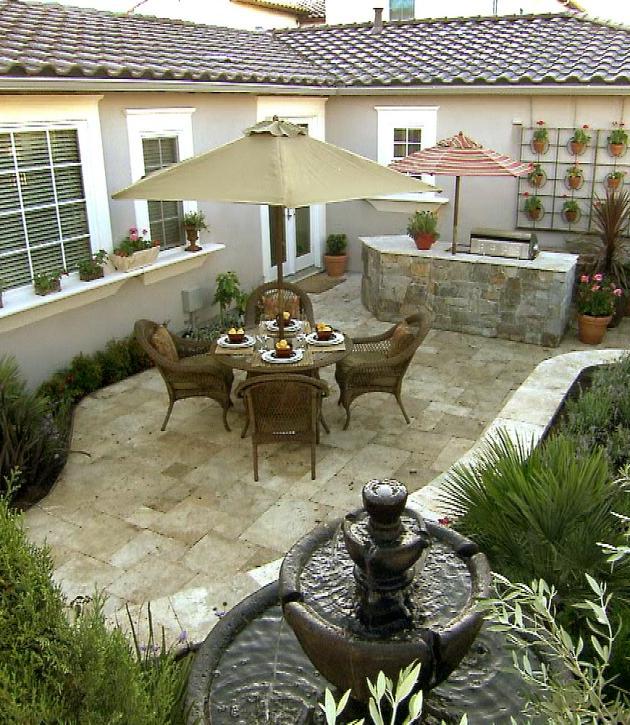
When constructing a patio, be sure to include enough room for lounge chairs, cocktail tables, a bar and plenty of space to move around. Patios can be constructed from many materials, including flagstone, brick, stamped concrete and concrete pavers. This picturesque patio features a dining area and a barbecue island.

Decks

Decks are made of wood or low-maintenance composite material. Just like patios, decks should be large enough to accommodate dining, sunbathing and other activities. This deck design features clean white railings that beautifully complement the lightly stained wood. Design by Peter Langham

Stairs for Your Landscape

Keep the topography in mind when planning stairs for your landscape. If you have a steep slope, break up stairs in sets of steps with landings, turns or switchbacks. Here, fragrant thyme accentuates the gentle curve of these stairs and ties them to the larger landscape. Photo courtesy of John Feldman

Built-In Furniture

Furniture in the garden is both functional and visually appealing. The architecture of your home should influence your garden furniture style. Hugged by morning glories, this handpainted bench invites you to sit at the edge of the lawn. Design by Dan Berger

Pergolas

An architectural focal point, pergolas provide shade and extra curb appeal. They can be freestanding or cantilevered from your house, and can be built from many different types of materials. Pergolas can be made from wood or vinyl with fiberglass columns, stone piers or metal framing. They can also be wired for electricity. This pergola offers a beautiful view and comfortable, shaded seating. Design by Scott Cohen

Similar to a pergola, a ramada is a hardscape structure built in a yard to provide shade. It is completely covered by a roof and often complements the home’s style. This ramada is all about comfort and style, with plush wicker furniture and warm copper and stone accents. It also has curtains to completely block out the hot summer sun. Design by Morgan Holt

Arbors

A beautiful addition to a landscape, an arbor turns an ordinary walkway, gate or patio into a focal point. Arbors are functional as well, providing treillage for plants. Surrounded by a mix of perennials and shrubs, this trellis serves as an entrance to a small birch grove accessorized with a bench. Design by Barbara Paul

Gazebos

Freestanding gazebos are extremely popular in landscaping projects. Before you drop one into your yard, be sure it has a purpose. Whether it’s a satellite patio, a spa enclosure or a sheltered play area for your kids, decide what you want the structure to be used for.


4 Tips For #AtticFinishing

atticfinishing

Figure you’ll need to beef up the floor, insulate—and more. Here’s a look at some building-code basics when it comes to turning attic space into living space.

Access and egress
Code generally requires a full-size staircase with a minimum 6-foot 8-inch clearance above it. For fire safety, there must be two ways out—a second staircase, for example, or a window.

Ceiling height
Any living space requires at least 7 feet of headroom over a floor area of at least 70 square feet, measuring at least 7 feet in each direction. At the Lyons’ house, this meant that only a portion of the attic was usable, though some of the low-clearance area was tapped for storage.

Floor support
Attic floors generally need to be reinforced with additional joists and a subfloor. The Lyons used a web of 16-inch-deep engineered trusses to accommodate wiring, plumbing, and ductwork, then topped the plywood subfloor with oak or tile. (Keep in mind that deep trusses will cut into headroom.) “Houses built before 1950, and some built after, may also need foundation work,” says architect Stewart Davis, especially if the project involves raising the roof, as the Lyons’ did.

Ventilation and insulation
Heat and moisture rise. This often means having to add air-conditioning, ceiling or window fans, and/or windows. The Lyons installed windows at each end of the roof to promote cross-ventilation. A layer of spray foam insulation under the roof and in the walls will help cut their heating and cooling costs.