

Paint Your Floors
Designing a pattern on the floor is an inexpensive way to tie together the look of your outdoor space. Designer Rachel Greathouse used a diamond pattern with a whitewash to fit the home’s farmhouse chic design. Depending on the pattern and palette, you can end up with a rustic or modern look.

Make an Eyesore a Focal Point
Instead of buying new furniture, rehab an old or damaged table with no elbow grease. Just cover it with a vibrant tablecloth, like the Mexican tapestry that WAKE + LOOM Design selected for this eclectic, colorful patio.

Puff Up Your Seating With a Pouf
Floor poufs are a low-price way to add seating without investing in larger pieces of furniture, such as a sofa or chaise, say Gabriela Eisenhart and Holly Conlan with WAKE + LOOM Design. While you can find outdoor poufs for less than $50, you also can make your own fabric pouf ottoman in a pattern and palette that you prefer. A garden stool is also an inexpensive, versatile item that can serve as extra seating or a side table.

When Life Gives You Lemons
There’s nothing sour about this well-styled patio sofa. In a small space, all you may need are a couple of pillows and accessories. It could be as simple as looking in your fridge. Here, designers Gabriela Eisenhart and Holly Conlan with WAKE + LOOM Design placed lemons in a metal bowl for a burst of color. You can sew a simple outdoor pillow as well.

Rescue Old Items
Reclaim an outdoor focal point with upcycled brick and barn doors. The biggest trick is to look for old barns, buildings and chimneys that aren’t being used, suggests Tyler Davis, owner of Athens Building Co., which worked with designer Tami Ramsey of Cloth & Kind on this project. Sometimes you can spot them from country roads. Approach the owner and offer to remove them if they will let you keep the material. You can get free materials and help someone remove a potential hazard from their property.

Select Low-Maintenance Plants
Using plants with low water use and low maintenance requirements is cost effective while providing color, movement and texture, says Patricia St. John with St. John Landscapes. Succulents, burgundy Cordylines, variegated plants and evergreen vines provide contrasting colors and textures, without the use of flowering plants. This project was an Association of Professional Landscape Designers award winner.

Pick a Prefab Product
A screen adds coziness to an outdoor area, and this prefab screen is cheaper than a custom one. It’s only on one side of the patio and is topped with a smaller “eyebrow” arbor. St. John Landscapes also saved costs by using low-water, low-maintenance plantings in this award-winning San Francisco backyard project.

Cut Groundcover Costs
The owners of a San Francisco townhome wanted to be cost effective wherever possible. St. John Landscapes used decomposed granite for the lower patio and paths, which is a cheaper option for a low-maintenance outdoor space.

Roll in a Cart
To get the look of this high-end bar cart on a budget, start with a basic metal or wire shelving unit, says Michiel Perry, founder of Black Southern Belle. Spray paint it your desired color. To add the lattice and bamboo trim, use a piece of vinyl diamond lattice, which you often see on outdoor decks and fences. Use bendable PVC pipe that is spray painted to match or in an accent color, for the trim.

Bring a Party to your Patio
Adorn your patio or deck fence with festive bunting to make it stand out from the rest, and every day will seem like a party. You can find outdoor pennant-style bunting like this at home decor and party supply shops for about $5-$10, or you can make your own.

Infuse Bursts of Color
Cute, cheap updates to a small patio include adding an outdoor pillow in a complementary color to a plastic Adirondack-style chair and an outdoor rug. If you don’t have room for a coffee table, a smaller end table, can serve as your bar when enjoying cocktails with friends. Amy Latta of One Artsy Mama made this table using upcycled crates.

Mix and Match
If you can’t afford a new farmhouse-style table, the same look can be achieved by mixing salvaged pieces to create your own table. Find an old tabletop, then add old or new spindle legs. If you paint the table and other outdoor furniture all white, it creates a modern and sleek look, says Ili Hidalgo-Nilsson, architect and designer with Terracotta Design Build in Atlanta.

Salvage Like a Star
Salvage and save money by using reclaimed wood for a barn door. Go big with the doors and embellish the area with a metal star, which can be found on the cheap at antique shops and junk shops. The weathered tones of the wood complement the star in this space designed by Cloth & Kind, and created by Athens Building Co.

Add a Set of String Lights
String lights add sparkle to an outdoor space, even when you have a limited budget.

Give Granite a Modern Update
This once-bland courtyard is now a showcase for salvaged and recycled materials. The contemporary dining set rests upon bands of reclaimed granite slabs. Matthew Cunningham Landscape Design used blocks of granite salvaged from a 19th century building in Boston as benches in this courtyard, which won an Association of Professional Landscape Designers award.

Create a Crate Table
Get crafty and create a side table, which can be put to use when you grill out. Amy Latta of One Artsy Mama used a large crate and added a shelf and a top for her DIY table. Making a pair of crate end tables cost less than $100, according to Crates & Pallet.

Be Versatile
The white tub on a red stand is a versatile outdoor item that Beth Johnson of B Interiors found at a sample sale. Use it as a drink cooler, toy holder, planter or container for garden supplies, for just a few ideas. Also, Johnson says melamine plates, which come in various shapes and patterns, are a budget-conscious buy for a vibrant patio table. You can find 12-piece sets for about $50. This table setting also includes vintage juice glasses from a thrift shop.

Style With Single Pieces
Combining a single flower floating in a metal bowl can be a no-fuss and affordable way to adorn an end table in an outdoor space. The succulent in a pot also is a long-lasting choice on a low budget.

Retain and Recover Existing Items
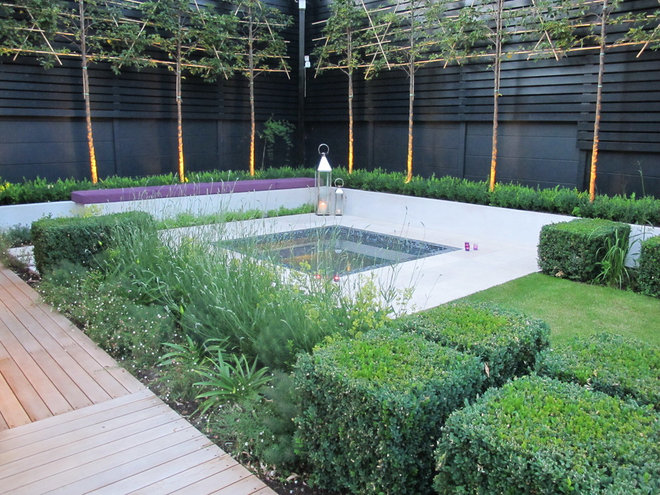
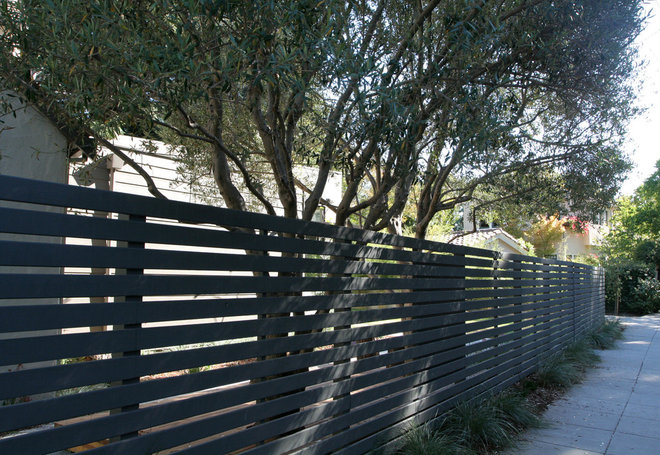
This contemporary outdoor space was once a forgotten, unused area. The design firm, A Blade of Grass, kept some existing materials, including the wood decking. The existing fence was updated with horizontal cedar cladding, which provided a clean, uniform backdrop. Garden stools are also an affordable, bold accent for a patio.

Boost the Look With Boxwood
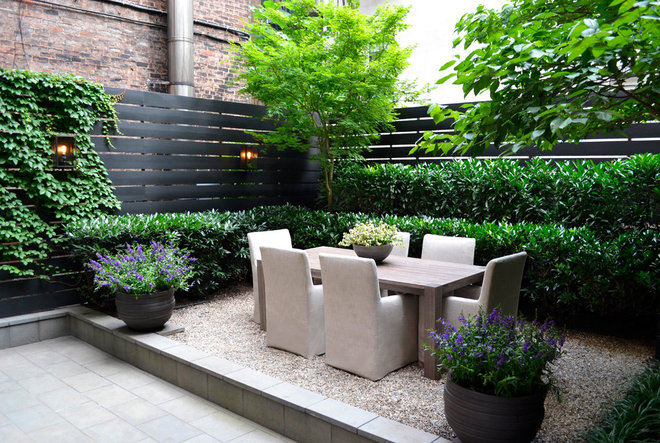
Boxwoods, such as the ‘Green Mountain’ boxwood on the left side of this contemporary patio, are smart, cost-conscious purchases for courtyard shrubs because they have handsome foliage and grow to 3 feet high by 3 feet wide and don’t need a lot of maintenance. Also, layering is a part of outdoor design. A plexiglass panel in front of a cedar fence on this patio by A Blade of Grass, which won an Association of Professional Landscape Designers award, creates dimension and interest. A plexiglass screen also can be an easy DIY project.

Make a DIY Storage Tower
For a custom towel and toy storage tower that costs less than $100, Jaime Costiglio from That’s My Letter used four crates from Crates & Pallet. Three of them were used to make the storage tower and the other was disassembled and resized to serve as a drawer. Think about ways to repurpose indoor furniture for outdoor use.

Decorate With Driftwood
For free patio and porch decor, use stones from your yard or a piece of driftwood from the beach or lake. “You would be surprised to learn that you already have plenty of decor options right in your own backyard,” says Atlanta designer Alice Cramer.

Cast a Glow With Lanterns
Take advantage of a privacy screen or wall separating your patio from neighbors. Hang lanterns, which can give your outdoor space a glow without taking up floor or table space on a patio. Thrift shop for used wire lanterns or globes, spray paint then any color you desire and add candles.
Pick a Consistent Hue
Play off the color of a dominant feature to make your accessory purchases worth every dollar. In this Atlanta courtyard, Cultivators Design and Landscape chose orange accessories since they match the color of the fountain cube and don’t detract from the water feature.

Color Underfoot
Instead of painting your floors, design experts suggest making a painted outdoor rug to freshen up a porch or patio floor. You can buy a cheap drop cloth, or use one that has saved your indoor floors when you have repainted a room, and turn it into a custom-colored rug.




 carolyn5280coloradohomes.net